


AI has arrived in drug development. Why hasn’t it yet made the impact we’ve been expecting? It’s not because the models aren’t capable (they are, increasingly so). It’s because capability was never really the issue.
What you find is that the organisation is a siloed machine. Regulatory requirements, liability structures, and the sheer specialisation of modern drug science have all pushed pharma toward tightly scoped teams working on tightly scoped problems. The result is that a company can run fifty drug programs simultaneously, accumulate decades of proprietary research and clinical data, and still have a researcher in one department unable to access knowledge that directly bears on their work, because it lives in another system, another team, or another project that formally closed three years ago.
Rather than fixing the problem, AI inherits it.
A model that can synthesise the scientific literature brilliantly will still operate blind to everything the organisation knows that isn’t published, and a workflow tool that automates one stage of asset evaluation doesn’t change the fact that much of the judgment that shaped stage one never reaches stage three. Every insight that fails to compound is a real cost, not just in efficiency but in the quality of the decisions that follow.
Drug development’s hardest challenge isn’t the science but the fact that the science is distributed across people, systems, and time in ways that make it nearly impossible for any single decision to draw on everything that’s known. A drug moves through an organisation as a series of handoffs, with each team picking up just a fragment of the story, and the full story exists nowhere.
The conclusion we keep coming back to is: the intelligence needs to follow the drug, not the department.
What would it actually look like if it did? If every insight from early discovery was available to the team running the Phase II trial? If the judgment that shaped a target selection decision left a trace that could be interrogated, challenged, and built upon, rather than evaporating when the scientist who held it moved to a different project? If the institutional knowledge accumulated across a portfolio of failures was genuinely available to the team starting fresh? This is what an operating system for drug development would do. Not automate discrete tasks, but connect the reasoning across the whole.
What Perceptic is building
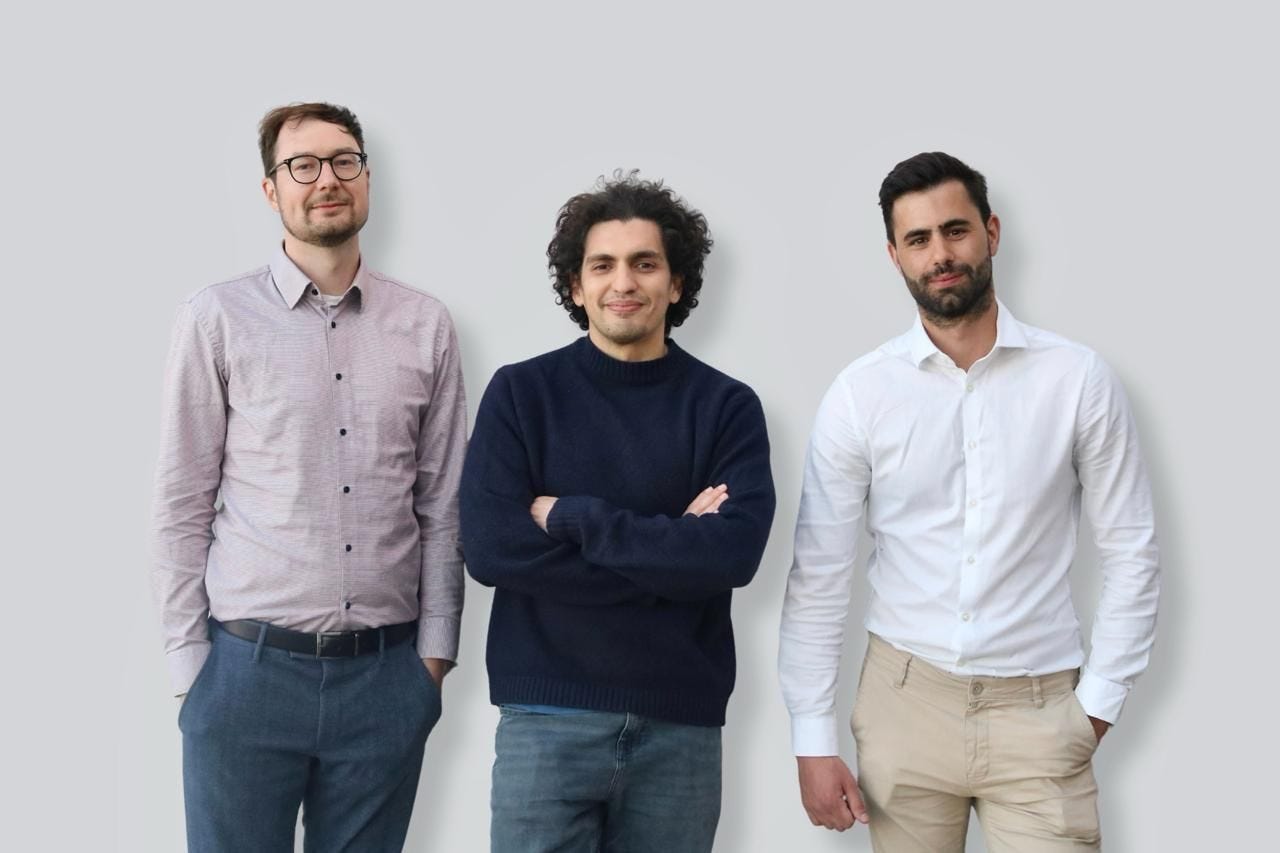
Our founders, spent 6+ years each at Palantir deploying production AI into environments with no tolerance for failure. Regulated industries, high-stakes decisions, organisations where trust in the system is earned slowly and lost instantly. What we carried out of that experience is a strong conviction about what doesn’t work. Models layered on fragmented infrastructure, chatbots surfacing documents nobody trusts, point solutions that solve one problem and create three handoff problems around it. Scientific R&D is not a prompt. It is deep context, hard-earned judgment, and long chains of reasoning where the cost of a wrong assumption isn’t caught until years later. Any system that doesn’t take that seriously will fail in the ways that matter most.
We’ve been building Perceptic directly with pharma teams since day one, in production, on real problems. Our platform connects evidence, data, and reasoning across the drug lifecycle on a shared intelligence layer where every insight is traceable and compounds over time. Today, with $12M in seed funding led by Accel alongside Air Street Capital and Elder Gull, we’re coming out of stealth.
This blog is where we’ll think out loud about the harder questions: what it actually means to build AI that scientists trust as infrastructure rather than novelty, how you make reasoning traceable in environments where a single undocumented assumption can derail a regulatory submission, and what separates the deployments that work from the ones that don’t.
If those are questions you’re sitting with too, we’d be glad to have you along. We’re always looking for engineers, scientists, and operators who want to work on problems that matter, and you can find our open roles on our careers page. And if you’re working inside pharma or building in this space, we’d love to talk. You can reach us at enquiries@perceptic.ai.
The Perceptic Team